Our Airlink flight touches down in Antananarivo (an·tuh·na·nuh·ree·vow), the Malagasy capital – and we are already exhausted. Having woken up at 02h30 to be at the airport ready for our flight, we are both starting the trip on the back foot. We arrive at a small but bustling airport, and after sorting out the Visa on arrival, we make a move to get our cash and SIM cards for the trip. Cash is king in Madagascar, no-one takes cards! So, we were both a bit nervous drawing out over a million Ariary that we would need to carry around with us somehow.
We then headed to the exit to find ourselves a taxi to the bush taxi station. Malagasy taxis are not metered – you must agree on a price beforehand to avoid a surprise later! After some haggling, we got into one and off we went for our first experience of Madagascar’s biggest city. The narrow streets are packed with every kind of transport imaginable, all vying for their share of the ever-narrowing strip of tarmac. What is interesting is how strangely well it works (in my opinion) – there are no lines, no signage, no robots, no traffic officers – but everyone just makes it work. People here are very competent drivers (because they simply must be to navigate these roads without dying!)
The city is densely packed with many different types of structures, most of them well built out of brick that is made by the locals from clay from the riverbeds. We saw hundreds of these bricks stacked along the river as we were driving along, and you often get a whiff of the acrid smell of the bricks baking in their furnaces which are constructed right next to the river. Along with the brick makers are hundreds of rice paddies, also along watercourses and in the low-lying areas of the city.
The Road to Fianarantsoa
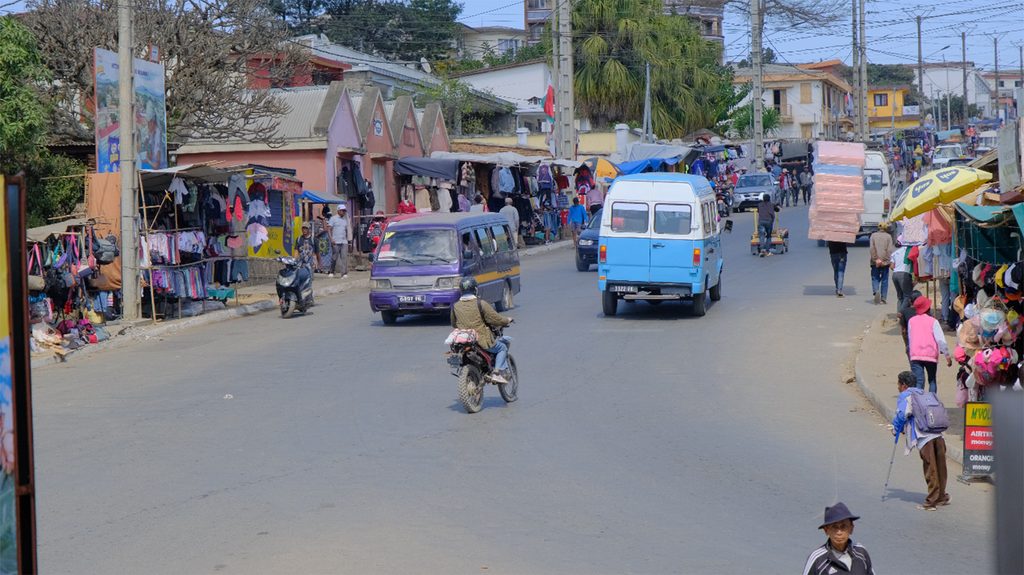
We had booked a ‘taxi-brousse’ beforehand (AKA bush taxi: these are 16-seater Sprinter vans that are packed to the brim with people and luggage) to Fianarantsoa through a local fixer that I got into contact through a website. However, we were confounded when our names didn’t appear on the booking list. Things were further confused when we found that we couldn’t communicate at all with anyone at the bus station. Eventually, after half an hour of Google translate back and forth and some hurried phone calls, we figured out that the person who had booked on our behalf had put their own name down on the booking form. Crisis averted, we still had our bus seats. Relieved to not have to try to find some sort of hotel at that time, we board the bus and settle in for the 12-hour journey South, going through the night to the town of Fianarantsoa.
Traveling with us in the bus is a large group of nuns, all quite jolly and talkative. The driver plays the same 12 songs loudly on repeat for the entire drive, and we don’t manage to sleep very much at all. We arrive bedraggled in Fianarantsoa, the last town, then linked up with a 4×4 vehicle took us a further 3 hours’ drive to Tsarasoa Lodge, at the foot of the climbing area.
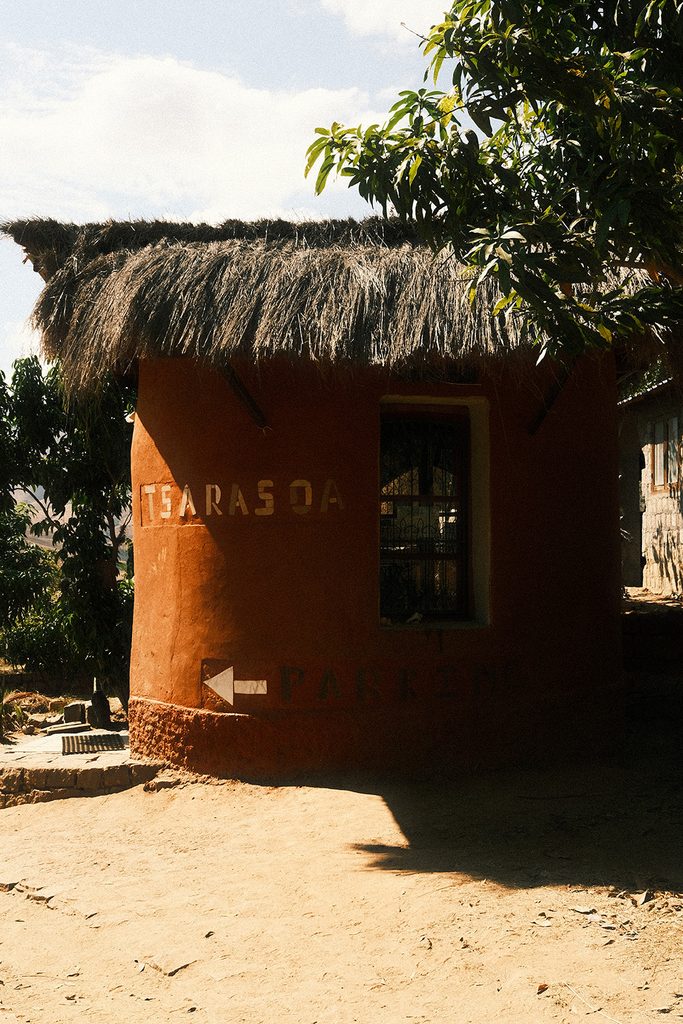
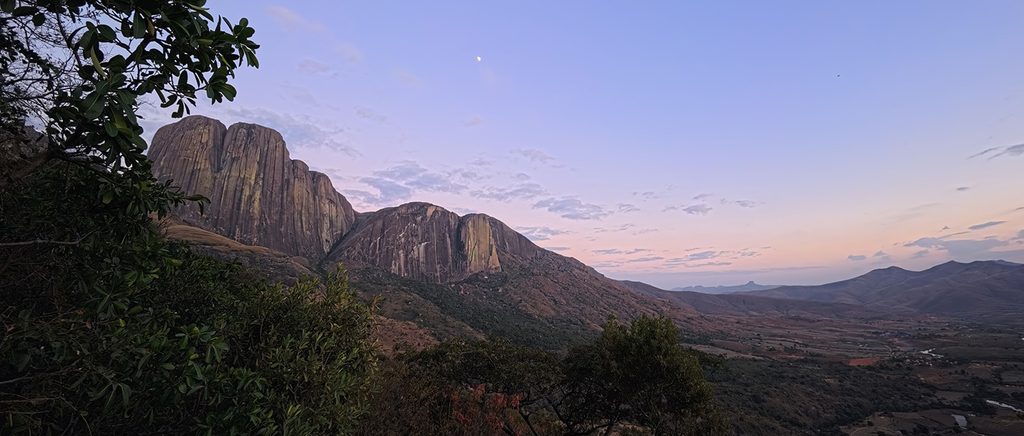
The landscape becomes increasingly rural, and we pass through many small villages with beautiful houses also made from brick, with orange plastering and some fantastic ornate details around the windows and roof. The same chaos still exists on these roads, and our driver swerves this way and that to avoid potholes, people, animals and vehicles. We eventually arrive at Tsarasoa lodge and witness a beautiful sunset, with the ancient granite walls towering into the skies in the background.
Chameleon Air Society
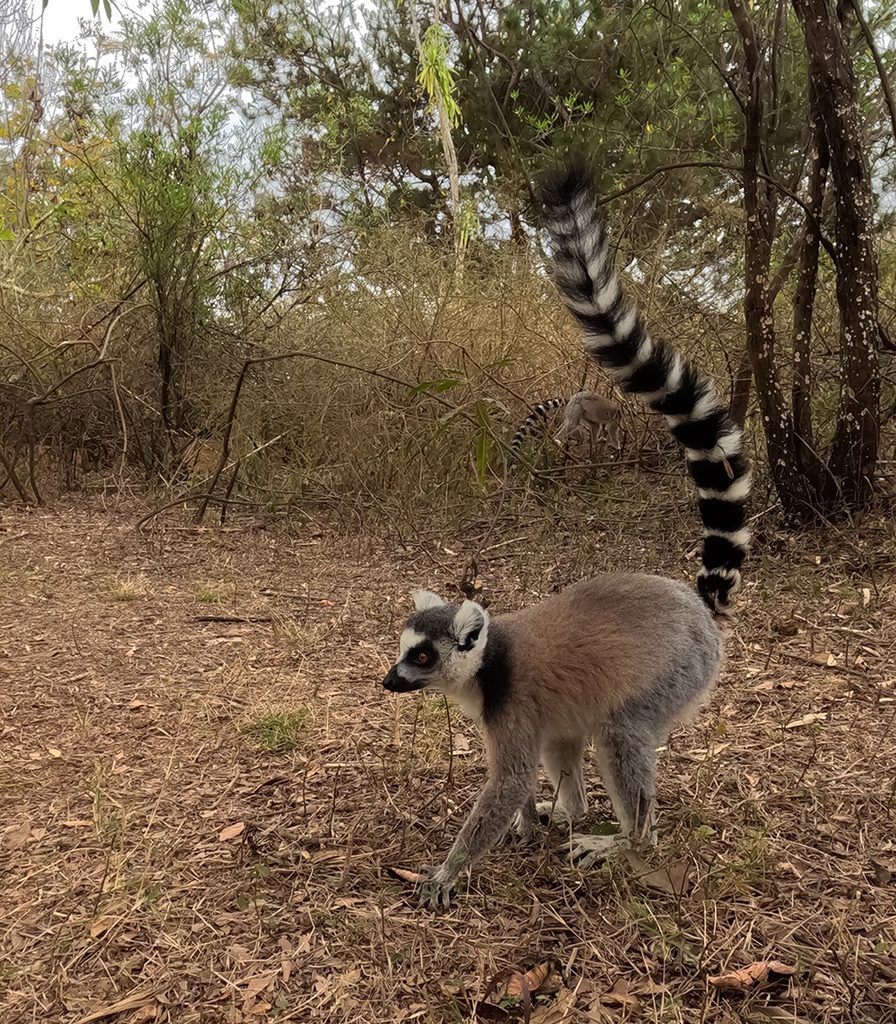
The next day we prepare to take on our first climb of the trip: Chameleon Air Society (6b+), so called because the top of the climb has a massive feature of rock that resembles a chameleon which presides over the valley from his perch. This was to be our ‘warm-up’ climb for the trip, to get into the style and see if we had prepared well enough to take on the massive 600-meter faces that we planned to do later in the trip. Doing the walk in for the first time, we get our first sight of a conspiracy (yes – a conspiracy) of Ring-tailed Lemurs – playfully jumping around in the long grass. We stash a bag with our food and water at the base of the route and take the rest of the day to prepare for the coming day of climbing.
We wake up the next morning feeling slightly more human again after our travel ordeal. After some strong coffee straight off the coal stove, we head off up the mountain. Arriving at the base, we kit up and set off on the 1st pitch. We take a bit of time to get into it, but eventually find the flow, and the pitches go down like clockwork. The rock is more featured than I was expecting, with some large flakes, nubbins and pebbles, making the climbing fun and intuitive. There were also some blank friction slabs thrown in, which were to be expected for granite.
We reached the top just before 12 o’clock and abseiled down the route, getting mildly lost on the way down and having to leave behind the odd old carabiner to ensure a safe retreat, as the anchors we came to were not equipped for abseiling. In the end we made it down despite the slight misadventure and got back into camp, heading straight for the bar for a beer and a game of chess with the barman –Toavina. Despite him blundering his queen, he still cleverly checkmated me shortly after, causing me to shout out in surprise.
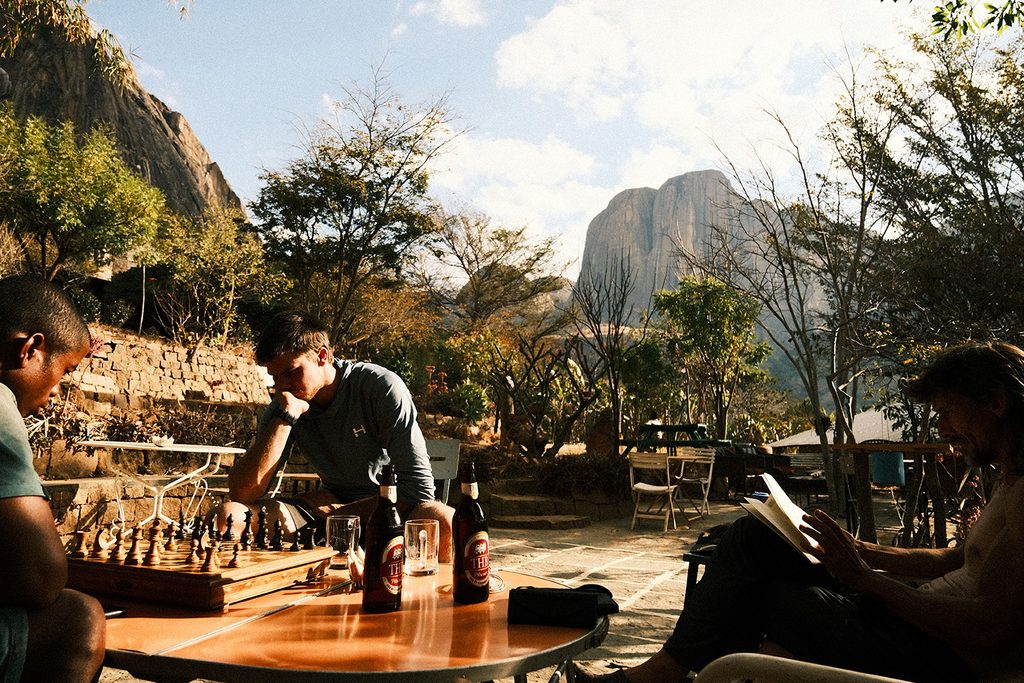
Varavaran Tontolo
When we arrived at Tsarasoa, we met a Spanish climber named Jorge. He was there alone, tackling the climbs using lead rope solo techniques. He had already completed more than 10 big wall routes solo at this stage, and he was at the end of his stay in the Tsaranoro valley. We asked if he would like to climb with us the following day, as we were doing ‘Varavaran Tontolo’, a 500 metre route with a deep cave eroded into the face that is possible to sleep in. Varavaran Tontolo is Malagasy for ‘World’s Door’. He immediately agreed, and we began to plan our approach and tactics for the route. A large 100-liter Black Diamond haul bag was quickly acquired from the lodge, which we nicknamed Fiona and stuffed full of all sorts of things, including 4 quarts of the local Three Horses beer. The following morning, after a fantastic breakfast prepared by the lodge, including fresh bread with fig jam and butter, bottomless cups of strong Malagasy coffee and condensed milk (or ‘whale sperm’ as our Spanish friend called it), we set off towards the looming granite walls.

Being the youngest, and the biggest, I was privileged with the great burden of Fiona, with Victor and Jorge taking 2 smaller bags. After a 2-hour walk, we eventually arrived at the base of the route, and after some general faffing, set off for the first pitch which consisted of classic granite friction slab at a low grade. The next couple of pitches went smoothly, up until the first pitch of 7a, which was my lead, some 4 pitches off the deck. I set off up it and get severely pumped, just managing to eek it out till the belay, with a tricky move through a small undercut scoop followed by a sketchy traverse rightwards to the chains. The rock is very granular, relying heavily on good footwork, solid shoes (my LaSportiva Katana laces were amazing), clever use of friction, and nimble balance to stay stuck to the wall.
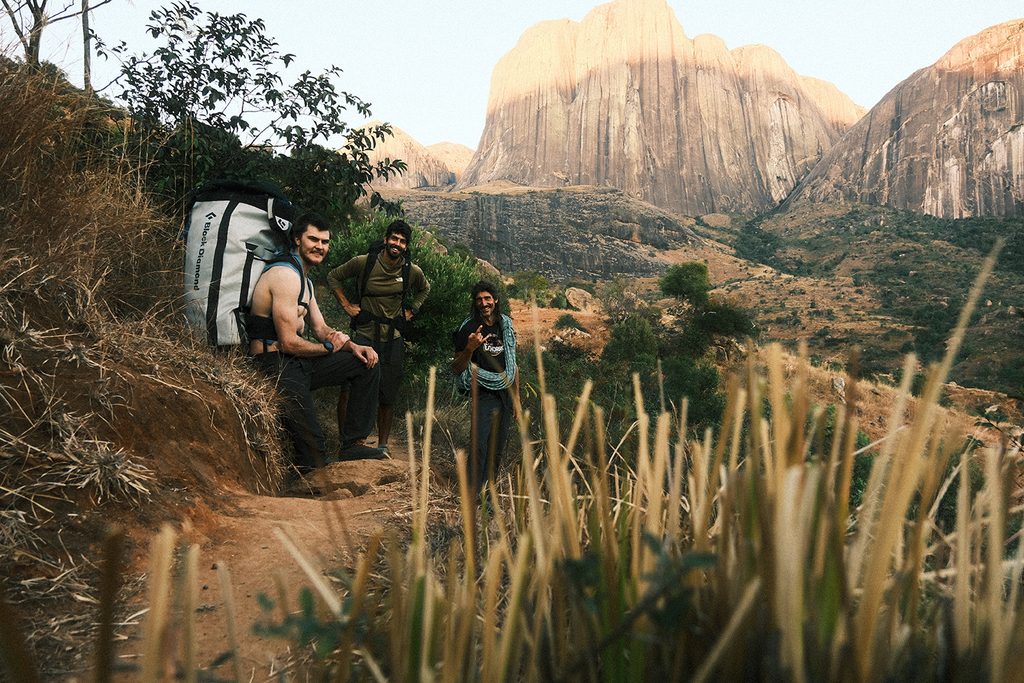
Hauling the bag is absolutely knackering, and we are all exhausted by the time we reach the crux 7b pitch, which is pitch 6. It’s my turn to lead again and I set off through a tricky traverse near the belay. I climb myself into a ball however, and take a large whip, the first of the trip. I lower off back to the stance and give it a second go, getting through the traverse and onto this beautiful slightly overhanging exposed headwall, orange in colour, with juggy flakes and stunning climbing. The pitch is extremely sustained however, and I end up in a sweaty mess, hanging on the rope once again. I dog my way through and discover the almost perfectly round cave – which our Spanish friend describes hilariously in his Catalan accent as ‘ze most perfect azzhole of ze mountain.’
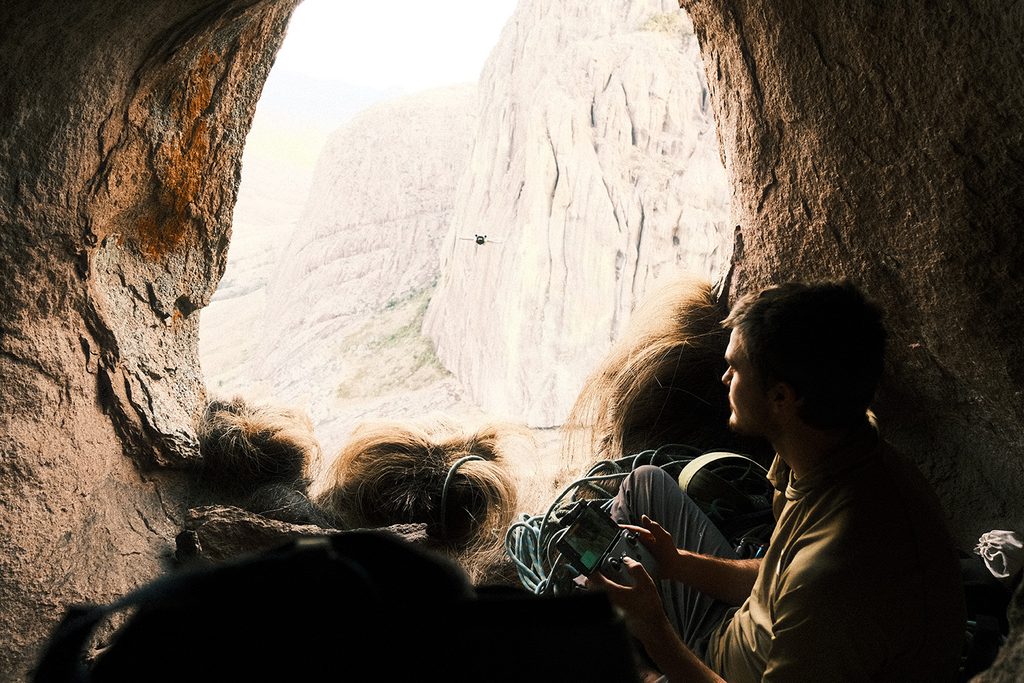
Settling down for the night in the cave we discover that it is in fact extremely dusty. Any small movement elicits a cascade of fine dust into the air, which we all promptly breathe in. Bats swoop past our faces as we fall asleep, swooping in and out of the cave, cutting through the moggy night air. We unceremoniously drink our beer, which is now flat, and ‘enjoy’ a cold freeze-dried hiking meal. We had no stove and camping gas canisters were few and far between in Madagascar.
I slept at the mouth of the cave, tied into a bolt, so that in the event I slipped towards the entrance in my sleep, I would not go over the edge. Naturally, because of this, I didn’t sleep very well.
Topping out on Varavaran
Getting going the following morning was its own expedition, with no way to make coffee. Despite this, we remained in high spirits. Victor leads the A0 pitch (A0 basically means there is a section of completely blank unclimbable rock – you must pull through on bolts) which brings us onto the exposed frontal face of Tsaranoro Atsimo, which culminates in some stunning pitches of classic chimney climbing. After topping out we elected to walk off the top, which proved much harder than we thought, as we had to traverse across the whole of Tsaranoro Atsimo and Tsaranoro Be to get to Tsaranoro Kely, which we could walk off from. This meant abseiling into a small, vegetated gully, jumaring up the other side on an old blue fixed rope (with the haul bag), then walking across Tsaranoro Be and back down again to get to the descent gully.
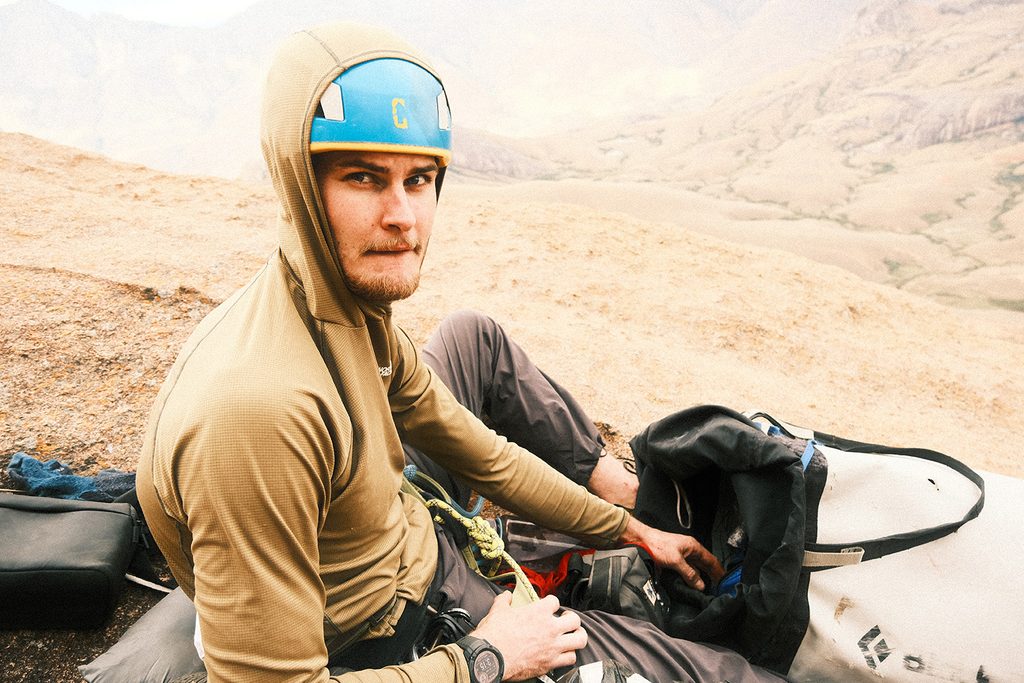
As we reached the final abseil, the last bit of light disappears from the scene, and we are left with only our headtorches to guide us down the rest of the way. We had also drunk the last of our water at the top of the climb and were now quite dehydrated, but we trudge it out till the end and collapse behind the dinner table back at the lodge to find a fantastic 3 course meal prepared for us. Water on its own has never tasted so sweet in my life, and I drink gallon after gallon, before wolfing down some tasty rice and beans in a delicious sauce, along with heaps of avocado, and a stack of fresh bread and butter. Then a quick cold shower (the solar geyser has long since cooled off) and we crawl into our little rondavels and sleep the sleep of the dead.
Stay tuned for Part 2.
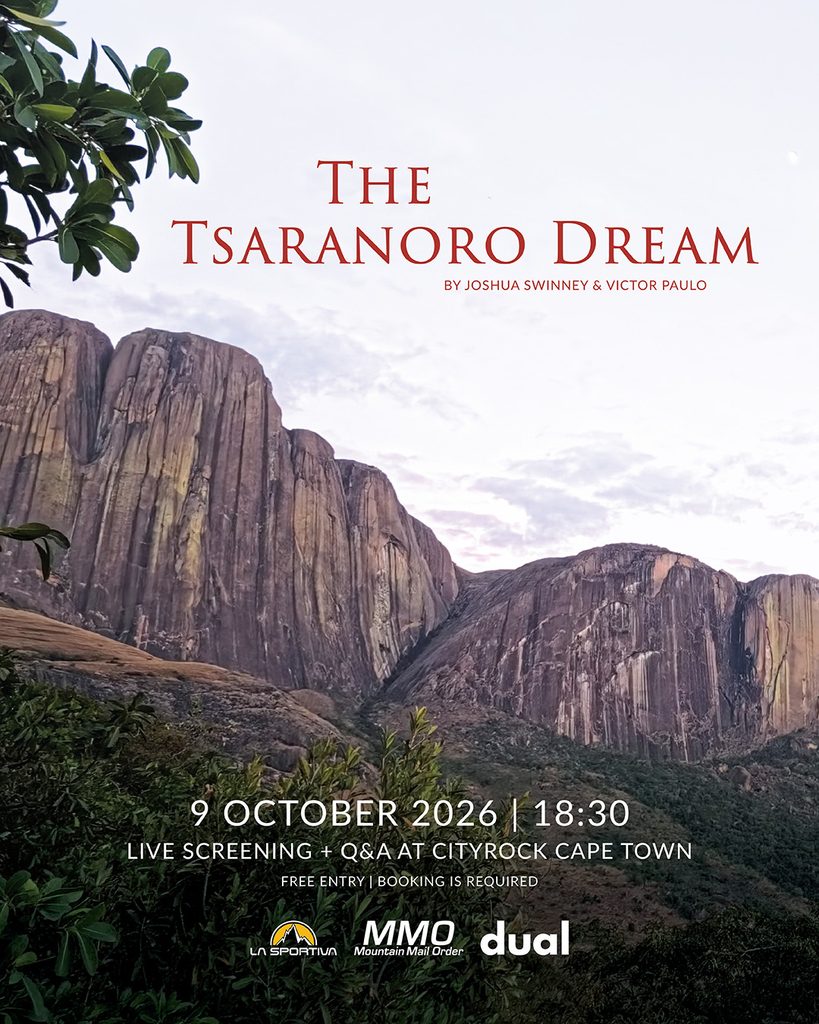
Josh Swinney & Victor Paulo tackle the towering granite of Tsaranoro Valley, Madagascar – catch the screening of The Tsaranoro Dream at CityROCK Cape Town, 9 October from 18:30, with popcorn, adult beverages, and a Q&A with the athletes to follow. Free entry, booking required.